Iwoye-Ketu Kingdom
The Home Of The Premier Aare Ona Kankanfo Of Yoruba Land
Iwoye-Ketu Kingdom
The Home Of The Premier Aare Ona Kankanfo Of Yoruba Land
ABOUT IWOYE-KETU
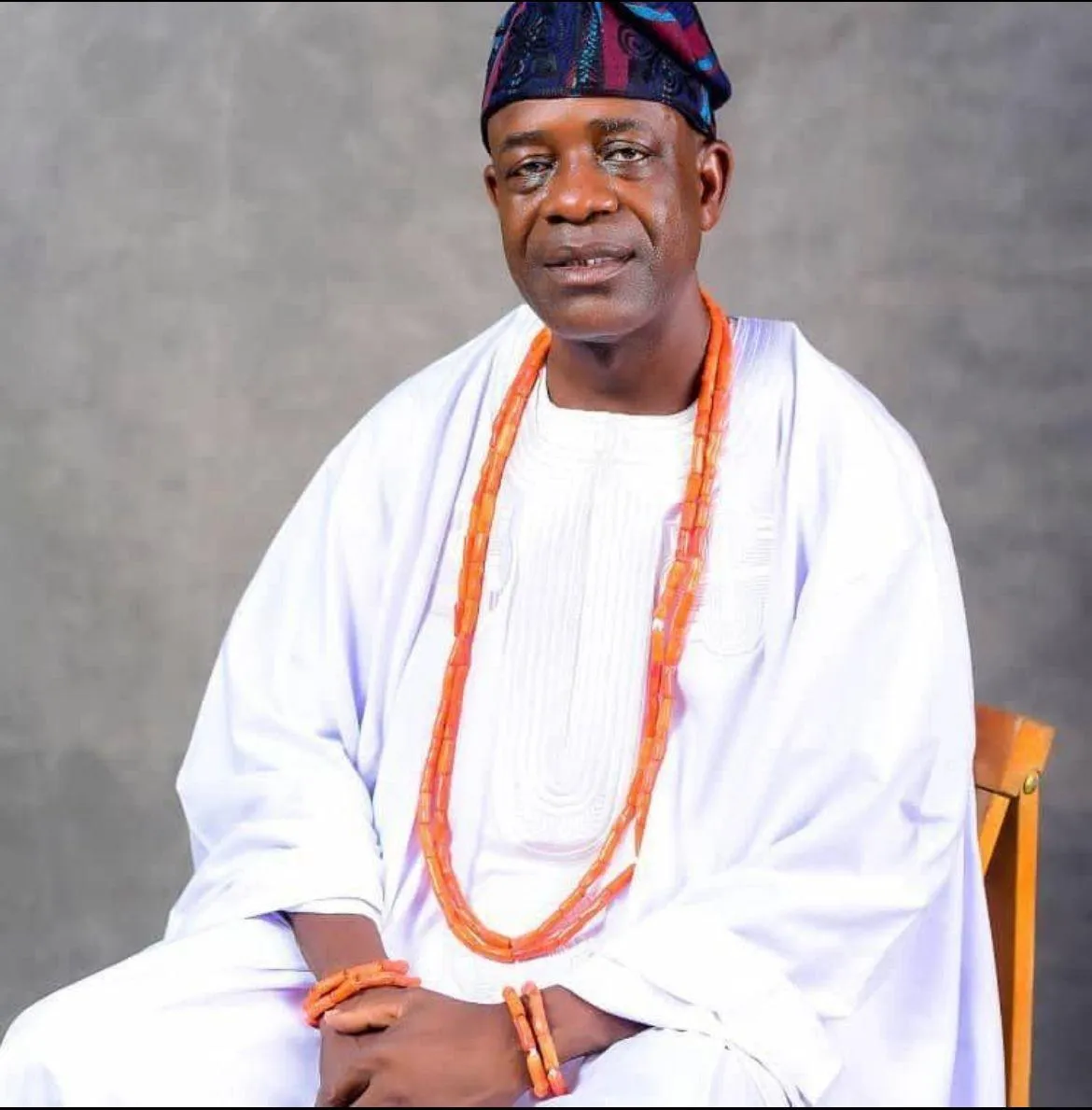
OOYEOF IWOYE-KETU KINGDOM
Iwoye-Ketu is an ancient and historic binational Yoruba town located right at the border between Nigeria and the Benin Republic, within the Imeko/Afon Local Government Area of Ogun State. The name Iwoye has been corruptly written in the past literature, especially in the French – Dahomey, as ‘’Iwouye or Youye’’. Its origins trace back to Olumu, a formidable hunter who settled at Ahoro-Ile, around the safeyi rock.
Long after Olumu established himself in Ahoro-Ile, an Ife prince, Ooye Osugbemi, from the Ife Ooye dynasty, migrated in search of a new settlement, bringing with him three significant symbols of authority: a beaded crown, the Opa Ogbo (a mystical staff), and the deity Orisa Oluwa (which is now worshipped as olojo festival in Ife). He first settled in Sabe (spelled Save in French) until an internal wrangling started over who became the ruler, and it was this disagreement that made Ooye and his contingents seek shelter elsewhere, and move out of Sabe. That age-long internal strife still persists in Sabe to this day, unfortunately. An Ifa divination was consulted, which gave them an inkling of the idea of where they were headed and the specific location to settle.
Accompanied by a younger prince, Onidirin (spelled "Idigny" in French), Osugbemi’s journey led them to Ahoro-Ile, where they were drawn to the sight of flames flickering around the Safeyi rock. Olumu, having previously consulted Ifa divination, had been foretold that a prince destined to rule the new settlement would arrive bearing a crown. Thus, Osugbemi was welcomed and became the first king of Ahoro-Ile, marking the establishment of the first Iwoye.
During their migration, Osugbemi and Onidirin encountered the Opara river that obstructed their path. Legend has it that Osugbemi stretched his Opa Ogbo, miraculously parting the waters for passage. Struck by the staff’s mystical power, Onidirin requested to keep it, believing it would fortify his future settlement. While Osugbemi remained in Ahoro-Ile, Onidirin continued his journey along the Yewa River.
ABOUT IWOYE-KETU
OOYEOF IWOYE-KETU KINGDOM
Iwoye-Ketu is an ancient and historic binational Yoruba town located right at the border between Nigeria and the Benin Republic, within the Imeko/Afon Local Government Area of Ogun State. The name Iwoye has been corruptly written in the past literature, especially in the French – Dahomey, as ‘’Iwouye or Youye’’. Its origins trace back to Olumu, a formidable hunter who settled at Ahoro-Ile, around the safeyi rock.
Long after Olumu established himself in Ahoro-Ile, an Ife prince, Ooye Osugbemi, from the Ife Ooye dynasty, migrated in search of a new settlement, bringing with him three significant symbols of authority: a beaded crown, the Opa Ogbo (a mystical staff), and the deity Orisa Oluwa (which is now worshipped as olojo festival in Ife). He first settled in Sabe (spelled Save in French) until an internal wrangling started over who became the ruler, and it was this disagreement that made Ooye and his contingents seek shelter elsewhere, and move out of Sabe. That age-long internal strife still persists in Sabe to this day, unfortunately. An Ifa divination was consulted, which gave them an inkling of the idea of where they were headed and the specific location to settle.
Accompanied by a younger prince, Onidirin (spelled "Idigny" in French), Osugbemi’s journey led them to Ahoro-Ile, where they were drawn to the sight of flames flickering around the Safeyi rock. Olumu, having previously consulted Ifa divination, had been foretold that a prince destined to rule the new settlement would arrive bearing a crown. Thus, Osugbemi was welcomed and became the first king of Ahoro-Ile, marking the establishment of the first Iwoye.
During their migration, Osugbemi and Onidirin encountered the Opara river that obstructed their path. Legend has it that Osugbemi stretched his Opa Ogbo, miraculously parting the waters for passage. Struck by the staff’s mystical power, Onidirin requested to keep it, believing it would fortify his future settlement. While Osugbemi remained in Ahoro-Ile, Onidirin continued his journey along the Yewa River.
Over time, two more rulers, Adegoke and Ajibode, succeeded Osugbemi in Ahoro-Ile. However, their reigns were plagued by frequent raids from Bariba-Fulani Jihadists in the late 17th century, similar to the attacks that devastated the Sabe Kingdom and Old Oyo empire. Additionally, the rocky terrain of Ahoro-Ile made agriculture difficult. These factors compelled the people to relocate southward to present-day Iwoye-Ketu, thus beginning the second era of Iwoye. The site of ‘’ekiti Ogu Agbade’’ marked the fortified sentry between the old and new settlements.
At this new settlement, the name "Ahoro-Ile" was abandoned in favour of "Iwoye," meaning "where we survived." The title "Ooye" of Iwoye, signifying "the one who survives," then becomes synonymous with Iwoye. With the original crown lost during the migration and diminished population, the town found it difficult to reinstate the monarchy, and the town remained without any substantive traditional head. Subsequently, the Dahomeans, in furtherance of their attack on Ketu and its neighbouring communities, fell on Iwoye in the year 1789, pillaging the town, carrying hostages while the remaining survivors fled the town and began an adventure for another place of settlement, marking the end of the second Iwoye. In a broader context, the unwarranted attack on Iwoye was perhaps an act of revenge for the role played by notable indigenes of Iwoye, who, as premier Aare Onakakanfo’s, had featured prominently in the numerous Oyo military expeditions against the King Kpengla-led Dahomean forces between 1728 and 1789. The Dahomean forces were also privy to the fact that the Iwoye defense system had been substantially weakened by frequent Fulani attacks.
The survivors fled to Idirin seeking refuge, but their request was reluctantly denied due to fears of the Dahomeans. The rationale was clear: if a formidable place like Iwoye could be overrun, then the situation for Idirin seemed bleak. Consequently, they journeyed north towards Ilikumu. There, they were offered shelter and allocated separate land at the outskirts—a location that would eventually become known as Iselu. After settling in Iselu, the new King Gezo of Dahomey, determined to break Oyo’s yoke, which he later did in 1827, demanded men from them for conscription into his army—though framed as a request, it was effectively an order with grave consequences for defiance under threat from the powerful Dahomean forces. This imposition led many to disperse again and establish nearby communities such as Moriwi, Oke-Agbede, and Wasinmi-Okuta. After the fall of Dahomey under the greater power of the Europeans in 1894, various groups and communities gathered at Agbasa to determine their next steps. While there was an initial plan to return home to Iwoye, which lay abandoned, many were already well-established in their new communities and hesitant about returning due to concerns over potential future attacks by Dahomey. Nevertheless, those who expressed a desire to go back made the journey back to Iwoye, signifying the start of what is known as the third era of Iwoye.
Sooner, as was later known, Seriki Abass arrived with contingents of white men from Badagry in 1895, following the Anglo-French inter-colonial border agreement of 1888, made contact with the people, erected a pillar ‘’120’’ at a spot, and encouraged them to choose which side of the divide they’d belong to within three days. The majority favoured the British side because they could not contemplate being on the same side with their dreaded enemy, the Dahomey. However, today, the town has expanded so much and spread over the two countries of Nigeria and Benin Republic.
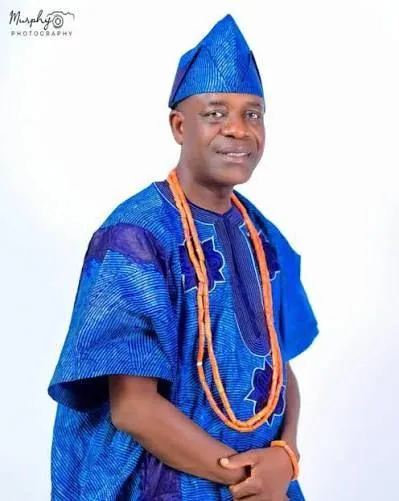
By then, British colonial authorities had started setting up local governance in the area. It was difficult to install a King, so the people agreed to install Baale Ogubi as the traditional head. After Baale Ogubi, two other Baales, Oyeeku and Aleyo (1936 – 1956), ruled Iwoye. However, as the town grew, its people sought to restore their kingship. This effort culminated in 1957 when Oba Idris Alamu Adetunji was selected as king. Political turmoil between the Action Group (AG) and the National Council of Nigeria and the Cameroons (NCNC) delayed his formal enthronement, leading to a three-and-a-half-year seclusion before his ascension to the throne on 29 October, 1960, and his official declaration in 1961. Oba Adetunji thus became the fourth king of Iwoye-Ketu. He ruled until his passing in 1991, followed by king Adebowale Ajayi (1991–2009), king Ademola Alaye (2010–2024), and the current monarch, His Royal Majesty, king (Sir) Isaac Adegbenro Oyero.
The suffix "Ketu" was later added to Iwoye to distinguish it from other Iwoye towns in Ogun State and Western Nigeria. This was due to its proximity to the Ketu Kingdom in the Benin Republic, founded by Alaketu, the eldest son of Oduduwa. Ketu and Iwoye are equally closely knitted together as foremost Yoruba Kingdoms in many respects, such that at the final selection of a person to fill the vacant stool of Ooye, a powerful delegation is sent to Ketu to inform the Alaketu of his coronation and obtain his consent simply from politeness and Alaketu’s recognition and not compelling or with any sense of dependence. This courtesy is still maintained reasonably to this present time despite the artificial boundary separating the two kingdoms, with each on either side of the Nigerian and Benin republics. There is another important history that forever binds the twin sister foremost kingdoms in that the mother of the fortieth Alaketu, Oba Akebioru, who reigned between 1780 and 1795, was a native of Iwoye. Interestingly, Iwoye, notably the home of powerful warriors that had produced the first two and fourth Aare Ona kakanfo of the entire Yoruba race, is perhaps the only town where the Alaketu of ketu influence and jurisprudence is restricted, unlike every other ketu-speaking community, both in the present-day Imeko/Afon and on the side of the Benin Republic. To put it more precisely, Alaketu could not summon anyone or make arrests in Iwoye. Illikimu is reported to be another Yoruba town that owns such a status.
Today, Iwoye-Ketu remains a significant Yoruba kingdom within Imeko/Afon Local Government, boasting three kings: the Ooye of Iwoye, the Alale of Moriwi, and the Alagbede of Oke-Agbede, forming "The Ooye-in-Council" alongside the six kingmakers of Iwoye-Ketu. Also included in the traditional council of the Kingdom are about twenty Baales and different categories of chiefs. The Ooye stool and Baale position were originally occupied by the Alaja ruling house, comprising Ologbun, Mesa, and Alaja. However, during the return to a monarchy in the 1950s, the Ada Paako family was recognized as a second ruling house for its role in the town’s reestablishment. Since then, succession has alternated between the two ruling houses, with each family presenting candidates while the kingmakers make the final selection.
Iwoye-Ketu is of significant historical and economic significance, being the location of the Yewa River's source—a river that gives its name to Ogun State's entire Yewa region, previously known as Egbado. The town boasts fertile soil recognized by researchers and investors alike for its suitability for cotton cultivation. Despite this potential, development has been stalled due to insufficient infrastructure. In contrast to Nigerian efforts at supporting local farmers, years ago the Benin Republic government provided seeds, enabling successful cotton farming on their side of the border. Additionally, Iwoye-Ketu hosts a major cattle market, serving as a key transit hub for livestock from various ECOWAS countries before they move to other parts of western Nigeria. The market also plays a vital role in supplying yam tubers and other farm produce across Imeko/Afon and beyond Ogun State. With its strategic location as a gateway to the West African bloc and northern Nigeria, Iwoye-Ketu requires greater government attention for both economic development and security.
Moreover, Iwoye-Ketu played a pivotal role in Yoruba military history as the birthplace of the pioneer Aare Onakakanfo (war generals) of the Oyo Empire: Kokorogangan, Oyatope, and Oku of Jabata. The title Aare Onakakanfo was instituted by Alaafin Ajagbo (before 1700) to safeguard the Yoruba nation from external threats. Despite the setbacks caused by the Fulani invasions, the Dahomey war, and almost collapsed infrastructure due to prolonged years of neglect, Iwoye-Ketu has retained its rich cultural heritage and remains a vibrant community. Cosmopolitan in nature, Iwoye-Ketu welcomes various ethnic groups who coexist peacefully. The resilience and strategic significance of this historic town continue to make it a notable kingdom in Yoruba history.
Over time, two more rulers, Adegoke and Ajibode, succeeded Osugbemi in Ahoro-Ile. However, their reigns were plagued by frequent raids from Bariba-Fulani Jihadists in the late 17th century, similar to the attacks that devastated the Sabe Kingdom and Old Oyo empire. Additionally, the rocky terrain of Ahoro-Ile made agriculture difficult. These factors compelled the people to relocate southward to present-day Iwoye-Ketu, thus beginning the second era of Iwoye. The site of ‘’ekiti Ogu Agbade’’ marked the fortified sentry between the old and new settlements.
At this new settlement, the name "Ahoro-Ile" was abandoned in favour of "Iwoye," meaning "where we survived." The title "Ooye" of Iwoye, signifying "the one who survives," then becomes synonymous with Iwoye. With the original crown lost during the migration and diminished population, the town found it difficult to reinstate the monarchy, and the town remained without any substantive traditional head. Subsequently, the Dahomeans, in furtherance of their attack on Ketu and its neighbouring communities, fell on Iwoye in the year 1789, pillaging the town, carrying hostages while the remaining survivors fled the town and began an adventure for another place of settlement, marking the end of the second Iwoye. In a broader context, the unwarranted attack on Iwoye was perhaps an act of revenge for the role played by notable indigenes of Iwoye, who, as premier Aare Onakakanfo’s, had featured prominently in the numerous Oyo military expeditions against the King Kpengla-led Dahomean forces between 1728 and 1789. The Dahomean forces were also privy to the fact that the Iwoye defense system had been substantially weakened by frequent Fulani attacks.
The survivors fled to Idirin seeking refuge, but their request was reluctantly denied due to fears of the Dahomeans. The rationale was clear: if a formidable place like Iwoye could be overrun, then the situation for Idirin seemed bleak. Consequently, they journeyed north towards Ilikumu. There, they were offered shelter and allocated separate land at the outskirts—a location that would eventually become known as Iselu. After settling in Iselu, the new King Gezo of Dahomey, determined to break Oyo’s yoke, which he later did in 1827, demanded men from them for conscription into his army—though framed as a request, it was effectively an order with grave consequences for defiance under threat from the powerful Dahomean forces. This imposition led many to disperse again and establish nearby communities such as Moriwi, Oke-Agbede, and Wasinmi-Okuta. After the fall of Dahomey under the greater power of the Europeans in 1894, various groups and communities gathered at Agbasa to determine their next steps. While there was an initial plan to return home to Iwoye, which lay abandoned, many were already well-established in their new communities and hesitant about returning due to concerns over potential future attacks by Dahomey. Nevertheless, those who expressed a desire to go back made the journey back to Iwoye, signifying the start of what is known as the third era of Iwoye.
Sooner, as was later known, Seriki Abass arrived with contingents of white men from Badagry in 1895, following the Anglo-French inter-colonial border agreement of 1888, made contact with the people, erected a pillar ‘’120’’ at a spot, and encouraged them to choose which side of the divide they’d belong to within three days. The majority favoured the British side because they could not contemplate being on the same side with their dreaded enemy, the Dahomey. However, today, the town has expanded so much and spread over the two countries of Nigeria and Benin Republic.
By then, British colonial authorities had started setting up local governance in the area. It was difficult to install a King, so the people agreed to install Baale Ogubi as the traditional head. After Baale Ogubi, two other Baales, Oyeeku and Aleyo (1936 – 1956), ruled Iwoye. However, as the town grew, its people sought to restore their kingship. This effort culminated in 1957 when Oba Idris Alamu Adetunji was selected as king. Political turmoil between the Action Group (AG) and the National Council of Nigeria and the Cameroons (NCNC) delayed his formal enthronement, leading to a three-and-a-half-year seclusion before his ascension to the throne on 29 October, 1960, and his official declaration in 1961. Oba Adetunji thus became the fourth king of Iwoye-Ketu. He ruled until his passing in 1991, followed by king Adebowale Ajayi (1991–2009), king Ademola Alaye (2010–2024), and the current monarch, His Royal Majesty, king (Sir) Isaac Adegbenro Oyero.
The suffix "Ketu" was later added to Iwoye to distinguish it from other Iwoye towns in Ogun State and Western Nigeria. This was due to its proximity to the Ketu Kingdom in the Benin Republic, founded by Alaketu, the eldest son of Oduduwa. Ketu and Iwoye are equally closely knitted together as foremost Yoruba Kingdoms in many respects, such that at the final selection of a person to fill the vacant stool of Ooye, a powerful delegation is sent to Ketu to inform the Alaketu of his coronation and obtain his consent simply from politeness and Alaketu’s recognition and not compelling or with any sense of dependence. This courtesy is still maintained reasonably to this present time despite the artificial boundary separating the two kingdoms, with each on either side of the Nigerian and Benin republics. There is another important history that forever binds the twin sister foremost kingdoms in that the mother of the fortieth Alaketu, Oba Akebioru, who reigned between 1780 and 1795, was a native of Iwoye. Interestingly, Iwoye, notably the home of powerful warriors that had produced the first two and fourth Aare Ona kakanfo of the entire Yoruba race, is perhaps the only town where the Alaketu of ketu influence and jurisprudence is restricted, unlike every other ketu-speaking community, both in the present-day Imeko/Afon and on the side of the Benin Republic. To put it more precisely, Alaketu could not summon anyone or make arrests in Iwoye. Illikimu is reported to be another Yoruba town that owns such a status.
Today, Iwoye-Ketu remains a significant Yoruba kingdom within Imeko/Afon Local Government, boasting three kings: the Ooye of Iwoye, the Alale of Moriwi, and the Alagbede of Oke-Agbede, forming "The Ooye-in-Council" alongside the six kingmakers of Iwoye-Ketu. Also included in the traditional council of the Kingdom are about twenty Baales and different categories of chiefs. The Ooye stool and Baale position were originally occupied by the Alaja ruling house, comprising Ologbun, Mesa, and Alaja. However, during the return to a monarchy in the 1950s, the Ada Paako family was recognized as a second ruling house for its role in the town’s reestablishment. Since then, succession has alternated between the two ruling houses, with each family presenting candidates while the kingmakers make the final selection.
Iwoye-Ketu is of significant historical and economic significance, being the location of the Yewa River's source—a river that gives its name to Ogun State's entire Yewa region, previously known as Egbado. The town boasts fertile soil recognized by researchers and investors alike for its suitability for cotton cultivation. Despite this potential, development has been stalled due to insufficient infrastructure. In contrast to Nigerian efforts at supporting local farmers, years ago the Benin Republic government provided seeds, enabling successful cotton farming on their side of the border. Additionally, Iwoye-Ketu hosts a major cattle market, serving as a key transit hub for livestock from various ECOWAS countries before they move to other parts of western Nigeria. The market also plays a vital role in supplying yam tubers and other farm produce across Imeko/Afon and beyond Ogun State. With its strategic location as a gateway to the West African bloc and northern Nigeria, Iwoye-Ketu requires greater government attention for both economic development and security.
Moreover, Iwoye-Ketu played a pivotal role in Yoruba military history as the birthplace of the pioneer Aare Onakakanfo (war generals) of the Oyo Empire: Kokorogangan, Oyatope, and Oku of Jabata. The title Aare Onakakanfo was instituted by Alaafin Ajagbo (before 1700) to safeguard the Yoruba nation from external threats. Despite the setbacks caused by the Fulani invasions, the Dahomey war, and almost collapsed infrastructure due to prolonged years of neglect, Iwoye-Ketu has retained its rich cultural heritage and remains a vibrant community. Cosmopolitan in nature, Iwoye-Ketu welcomes various ethnic groups who coexist peacefully. The resilience and strategic significance of this historic town continue to make it a notable kingdom in Yoruba history.
IWOYE MAGA
OMO AFABON JA
Iwoye-Ketu is located primarily in Ogun State, southwestern Nigeria, with its western portion in Benin. It is inhabited by eight ethnic groups, including Yoruba, Egun, Hausa, Igbo, Fulani, Igede and the Ohori
IWOYE MAGA
OMO AFABON JA
Iwoye-Ketu is located primarily in Ogun State, southwestern Nigeria, with its western portion in Benin Republic. It is inhabited by eight ethnic groups, including Yoruba, Egun, Hausa, Igbo, Fulani, Igede and the Ohori
Important Information
Country: Nigeria
State: Ogun State
Local Government: Imeko Afon
OOYE: Sir Isaac Adegbenro Oyero
Monarchy
Government Type
25, 000
Population
Before c.1600
Year of Establishment
Important Information
Country: Nigeria
State: Ogun State
Local Government: Imeko Afon
OOYE: Sir Isaac Adegbenro Oyero
Monarchy
Government Type
25, 000
Population
Before c.1600
Year of Establishment
OUR CULTURE
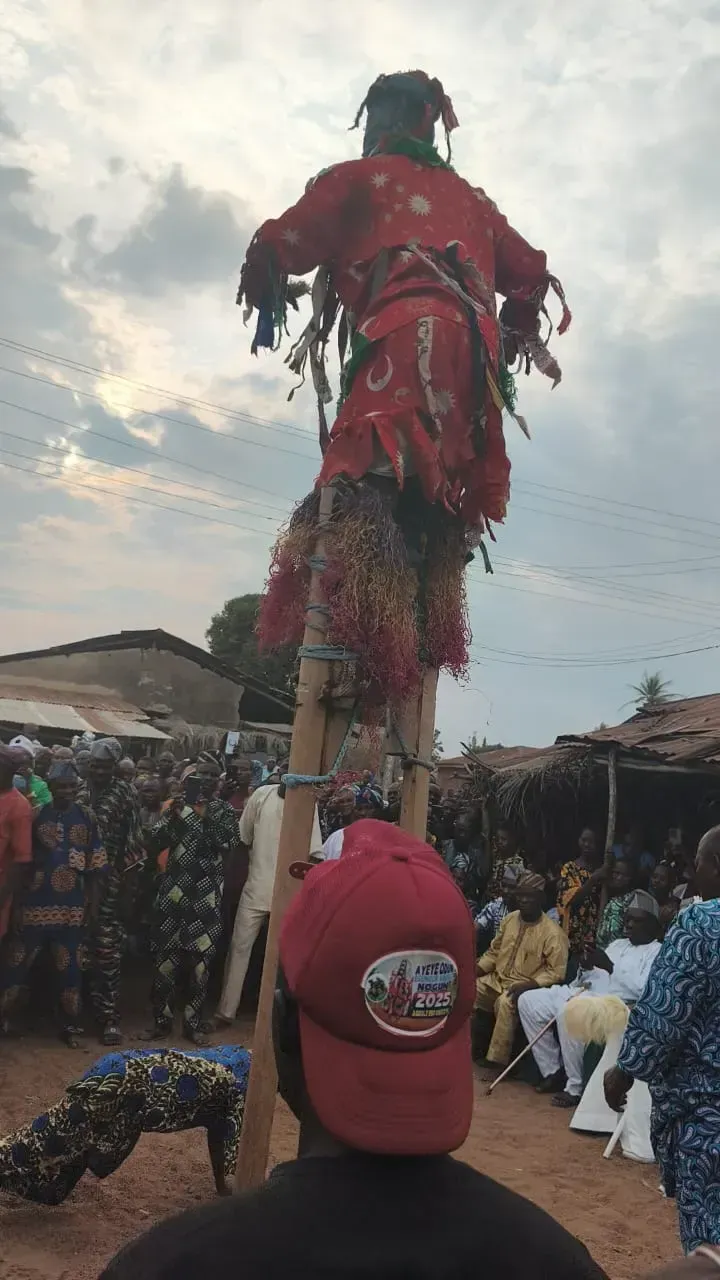
GAGALO: A Living Heritage of Iwoye-Ketu by Abel Babatunde
Gagalo is a vibrant performance art rooted in the rich cultural traditions of the Yoruba people. It is one of the unique communal expressions that shaped my childhood in Iwoye-Ketu, a historic town at the origin of the Yewa River, from which the entire Yewa region of Ogun West Senatorial District derives its name. Iwoye-Ketu, straddling both Nigeria and the Benin Republic, is not only a binational community but also a foremost Yoruba kingdom that proudly produced the first three Aare Onakakanfo of Yorubaland.

The Mystery and Magic of Oròkórò Festival in Iwoye-Ketu by Abel Babatunde
When October draws near in Iwoye-Ketu, a quiet buzz begins to sweep through the community. People know what’s coming. It is the season when voices from a mysterious world, Jàkinijá, come visiting. It is the time of the “Oròkórò Festival” — a tradition that makes this town in Ogun State stand out among Yoruba communities.

Iwoye-Ketu: Community Where It’s Taboo To Use Umbrella by Jo Daniel
Iwoye-ketu is a border community in Ogun State. As a custom, it is a taboo for residents to use umbrella or rear pigs. GBENRO ADEOYE, who visited the community, reports on the agelong tradition
It’s the start of another rainy season, a time when people sometimes walk in hurried steps with umbrellas in hand to ward off the rain.
OUR CULTURE
GAGALO: A Living Heritage of Iwoye-Ketu by Abel Babatunde
Gagalo is a vibrant performance art rooted in the rich cultural traditions of the Yoruba people. It is one of the unique communal expressions that shaped my childhood in Iwoye-Ketu, a historic town at the origin of the Yewa River, from which the entire Yewa region of Ogun West Senatorial District derives its name. Iwoye-Ketu, straddling both Nigeria and the Benin Republic, is not only a binational community but also a foremost Yoruba kingdom that proudly produced the first three Aare Onakakanfo of Yorubaland.
The Mystery and Magic of Oròkórò Festival in Iwoye-Ketu by Abel Babatunde
When October draws near in Iwoye-Ketu, a quiet buzz begins to sweep through the community. People know what’s coming. It is the season when voices from a mysterious world, Jàkinijá, come visiting. It is the time of the “Oròkórò Festival” — a tradition that makes this town in Ogun State stand out among Yoruba communities.
Iwoye-Ketu: Community Where It’s Taboo To Use Umbrella by Jo Daniel
Iwoye-ketu is a border community in Ogun State. As a custom, it is a taboo for residents to use umbrella or rear pigs. GBENRO ADEOYE, who visited the community, reports on the agelong tradition
It’s the start of another rainy season, a time when people sometimes walk in hurried steps with umbrellas in hand to ward off the rain.
GALLERY









Let Us Come Together and make Iwoye-Ketu Great
08032834000
+234 803 437 0758
Contact Address: Ooye of Iwoye-Ketu Palace, Iwoye-Ketu, Imeko-Afon LG., Ogun State, Nigeria.
SUBSCRIBE TO OUR NEWSLETTER